 MONKEY MART








A Slow Start Filled With Small Actions
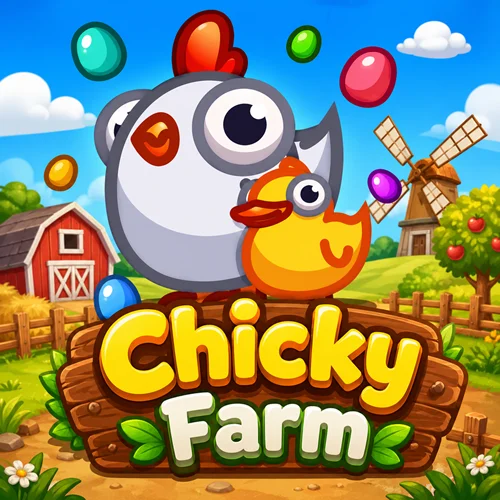
Chicky Farm opens with a quiet routine that feels almost minimal at first. One hen, one feeder, and a simple cycle where feeding leads to eggs, and eggs lead to income. The pace builds gradually as more hens join the farm, turning isolated actions into overlapping tasks that require attention. Eggs begin to appear faster than they can be collected, and small delays start affecting output. What once felt calm becomes a steady flow of activity, where timing and consistency shape how efficiently the farm runs. The experience grows not through sudden changes, but through accumulation that slowly transforms the entire space into something busier and more productive.
Systems Behind the Surface
Underneath the simple visuals sits a loop built around repetition and scaling. Feeding hens triggers production, which feeds into a collection system that converts eggs into profit. Each layer connects to the next, forming a chain where interruptions reduce efficiency.
Feeding vs. Collection Timing
Expanding the number of hens increases output, but also introduces more points of delay if not managed properly. Automation through hired workers shifts part of the workload away, yet the system still benefits from active oversight, especially when production peaks. Balancing the speed at which you feed your hens with the rate at which you collect their eggs is key to avoiding bottlenecks in your farm's workflow.
Optimizing Your Layout
As the farm grows, the spatial arrangement of feeders and nests becomes critical. Minimizing the distance your character travels between feeding stations and egg piles can save precious seconds that add up to significant profit over time. A circular or grid-based layout often works best for maintaining a high-speed harvest cycle.
Progression Snapshot
| Stage | Focus | Result |
|---|---|---|
| 🌱 Early | Single hen, manual feeding | Controlled and slow output |
| ⚡ Mid | Multiple hens, faster cycles | Increasing overlap and pressure |
| 🏭 Late | Automation and upgrades | Continuous production flow |
Where Decisions Start to Matter
Efficiency becomes more visible as the farm expands. Adding more hens increases production, but without proper upgrades or collection speed, output begins to pile up instead of converting into profit. Investing in productivity improvements often brings better results than expanding too quickly.
Automation Benefits
Faster cycles keep the system moving without bottlenecks. Automation reduces repetitive tasks, yet relying entirely on it can slow down peak efficiency if not supported by upgrades. A balanced approach, where growth and optimization move together, allows the farm to maintain steady progress while avoiding unnecessary slowdowns. Upgrading your automatic feeders and collectors in tandem will yield the highest passive income over time.
In Context With Similar Games
Some idle systems take this further, such as Burger Clicker where progression is almost entirely tied to scaling output.